Learn this 19th-century photographic printing process to create fine art prints, cards, or bespoke books.
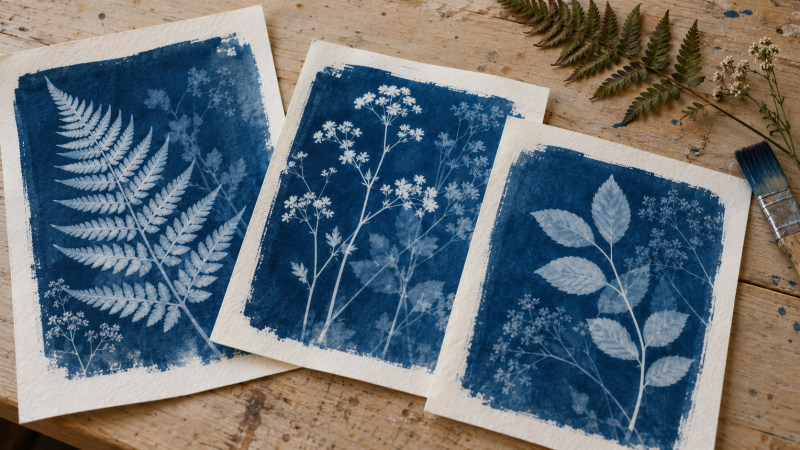
The Cyanotype: This forgotten photographic printing process from the 19th century was invented by Sir John Herschel (1792–1871) in 1842. Also known as shadowgraphs or blue-prints, this fascinating photographic printing process can be used to create fine art prints, cards or bespoke books. Without any photographic knowledge or specialist equipment, it is possible to create beautiful images with the cyanotype process. Images can be printed on a range of surfaces such as fine art papers, silk and cloth. Cyanotype prints are archival and will last for many decades.
Expected learning outcomes
- Learn about an analogue photographic method (cyanotype)
- Learn about composition within photography
- Gain knowledge about the handling of photographic chemicals and archival painting
- Gain knowledge of ambient light exposure and organic toning methods
What to bring
- Two disposable masks
- Two disposable gloves
- Apron or old shirt to protect clothing
- A collection of small found objects that you could use for your printmaking. eg. leaves, dried flowers, thread, jewellery, lace/fabric, bits and pieces that can be found in the back of your junk draw
- Water bottle to stay hydrated
We'll provide all other materials for this course including archival papers, chemicals and equipment. Tea and coffee will be provided in the staffroom for breaks.
Who should attend?
Crafters and artists looking for a new form of expression. Photographers looking for an alternative way of presenting their images. Anyone who wants to learn about an 'older' artistic technique of photography.
Information and logo sourced from the Selwyn Community Education website.